
Twelve months ago at the Sydney Test of 2007, the retirements of three of Australia's greatest cricketers were celebrated: opening batsman Justin Langer; fast bowler Glen McGrath and spinner Shane Warne.
This January's 2008 Sydney Test match saw a new generation of cricketers padding up and shining the ball. Whether they will leave as an indelible mark on Test cricket as their predecessors is yet to be determined. Their idiosyncrasies are still to be recorded in future in the annuls of cricket.
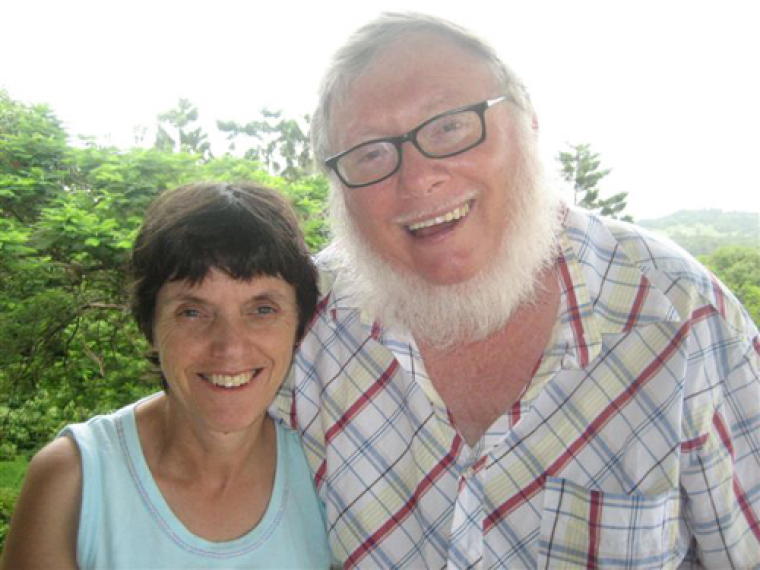
M V Tronson laid the foundations of the Sports and Leisure Ministry in 1982 and remained at its helm for 18 years before becoming ill. He and his wife Delma were released by Heads of Churches in March 2000 for recuperation to a quieter life retaining the Cricket and Athlete Respite ministries under 'Well-Being Australia'.
"Eight years on, I reflect on the rich blessing of personally witnessing some of the younger sports ministry personnel I mentored take their own positions in various ministry situations," M V Tronson stated.
"I reject the common misconception, heard in both cricket and sports chaplaincy circles, that it was less difficult for the previous generation. This is blatantly false. Each 'new guard' faces issues unique to its own era," concluded Mark Tronson
As transitions occur in Cricket, so too, M V Tronson says, they occur in Christian ministry, and are particularly noticeable in highly specialised areas ranging from chaplaincy to professional sport. Philosophically, the hallmarks of changing the baton are similar whenever and wherever new 'players' begin their own regime under changed administrative systems.
"I recall at a sports ministry seminar, John Woods the Canberra Raiders chaplain, explaining how he didn't have a handbook critiquing the intricacies of engaging in a ministry to professional athletes," M V Tronson noted.
However, in pioneering Australian sports ministry, M V Tronson has been able to bring to light a number of fascinating revelations. He comments:
"First, no two professional sports organisations are the same, even if they happen to be in the same sporting code. Each is unique with differing philosophies, management styles and particular 'living' legends.
"Second, I noticed the chaplain was never seen as a threat because they were independent of the process of sport. He/she did not compete and was not chasing a position on the field; and conversely, athletes had no interest in being a member of clergy.
"Third, ignorance can be a blessing. Coaches don't want an assistant coach disguised as a chaplain; and administrators can be assisted greatly by someone who is outside the encumbrance of the historical furniture."
Although it is fascinating to observe a new generation of cricketers, M V Tronson, as a Christian minister, sees more significance in eternal consequences.
A mentor of M V Tronson is Reverend Peter Thomson of Melbourne, who was sports ministry chairman for seven years in the mid nineties. He was also is a past Timbertop headmaster, a chaplain and a friend to former UK Prime Minister Tony Blair.
He touched Mark Tronson's heart with many an incisive comment, one of which was the joy to observe God's handiwork from a distance as another generation takes on this Great Commission.
"I'm rejoicing in the ministry challenge of the next generation whom I personally mentored, just as those in the cricketing world rejoice in the sporting challenges of young cricketers whom they have mentored," M V Tronson mused.