
With recent publicity and ridicule concerning an American Christian leader (Harold Camping) predicting the end of the world, it is worth considering these sorts of claims and their impact on society. I believe what is at the core of these claims about the End is something deeply seated in the human heart.
History has been filled with predictions of the end of the world, the most recent and famous ones being the Y2K millennium bug, and the 2012 end of the Mayan calendar. I remember as a 12 year-old going to a Christian book store and seeing a book saying that the bible predicted the end of the world to be in the year 2000.
As a scientist I am trained to look at the evidence and come up with reliable conclusions. So when I hear about claims of the rapture and various doomsday scenarios I tend to consider the claims against the evidence. However this is not always easy; because I like everyone have a bias towards whatever I already believe.
Even in science people will sometimes only look at the evidence that supports their claim, or analyse the data in such a way that it proves their concept. So it is not a surprise when non-scientists fall into the trap of what psychologists call "Confirmation Bias", the process of only looking at or accepting the evidence that supports your own beliefs.
The fact of the matter is that the Bible is so large, and there are so many ways to mathematically manipulate and analyse it, that if you try hard enough you can make it predict anything. Often when people 'predict' things they are even doing it with the English translation, which is grammatically and phonetically different from the original texts! The only way we should ever interpret scripture is by reading it and accepting the divine revelation contained within. However people continue to try to read more into the Bible than what is there.
There is attractiveness to this idea of a predictable end of the world: when we know the end of things we can prepare, and just in time. If I knew the time and date of my death there would be a few things that would be tempting to do. In particular I could do whatever I liked until just before I died, and at this point in time repent and be saved. In essence I could be hedonistic and stop just in time to save myself from eternal damnation.
Predicting the future allows us to feel that the future is constrained, controllable and safe. Yet it is clearly wrong that I should sin until just before death. Simply put, how could I truly be repentant if my 'repentance' was timed for my own benefit? In a very real way, my behaviour would be an attempt to constrain God within my conveniences.
Herein lays the true sin of trying to predict the future: it is an attempt to place our lives outside the sovereign will and judgement of God. If we know the time of date of things then we can arrange our lives to benefit ourselves the most, in order to fulfil selfish desires. God becomes "manageable."
However this doesn't explain why so many people are so completely convinced with predictions of the future such as horoscopes and why when doomsday predictions are proven to be false many persist in their beliefs.
A few years ago I saw a documentary about a cult in the USA about a man who renamed himself as "Michael", and proclaimed himself to be a saviour. Part of his prophecies was that the end of the world would come at a date he specified. The documentary crew followed all the events closely up to and including this date. Of course nothing happened, but the followers believed that something mystical did transpire, did and continued following this man and his prophecies, right up until the time he was imprisoned for child sexual abuse.
The reason that people continue to follow something even when it is wrong is simple: they have invested too much into it emotionally for it to be accepted as false. This is called in psychology "Cognitive Dissonance Theory".
Basically, this well established model of human behaviour states that people will go through all kind of mental gymnastics in order for their world view to be kept stable. If you had sold all of your possessions and abandoned your family but the reason you did so was proved false would you believe the proof? Most people wouldn't, simply because it is too hard to swallow pride and the blow to self-esteem seems too severe.
All of us, including Christians, can fall into the trap of investing ourselves too much in what is not biblical, and will shut out reason because reason is too hard. 1 Thessalonians 5:1 -7 tells us not only can we not know the time and date of the Lord's coming, but that we should always be vigilant. We should always be "sober", and I believe part of this is to constantly challenge each other's beliefs where they may be false and help rid each other of ignorance.
Let us not ignore existing evidence because it is threatens to be too difficult to fit in with our comfort zone. As believers in the inspiration of scripture, we can be confident to look at all the evidence, because what we believe about Jesus is true no amount of evidence can ever prove us wrong. Always seek God and Christ, because as Jesus said, "...I am the way and the truth and the life. No one comes to the Father except through me." (John 14:6).
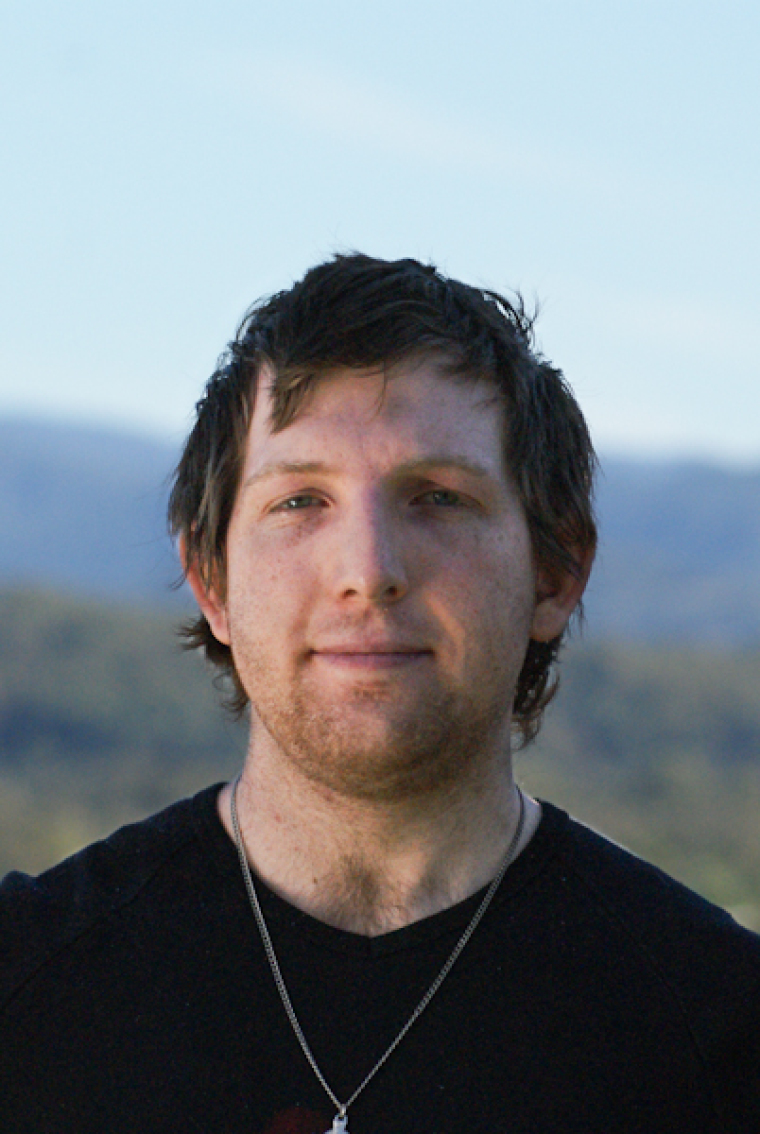
Nathanael Yates from Perth, Western Australia, is an award winning young scientist who has won a scholarship to Oxford for 12 months as from October 2011.