
I didn't. And ever since, I've wondered a lot about sacredness. What is sacred stuff all about?
Sacredness
There's lots of sacred stuff in the world. Mormons have sacred underwear. The Maori have sacred villages. The Koran to Muslims. Land to Indigenous cultures. I even know a guy who took a lounge chair to the MCG on AFL Grand Final day to just sit outside the stadium and absorb the 'sacredness of the moment.'
And sacredness can be dangerous. Sometimes our passionate attempts to protect what we think is sacred - be it marriage, economic systems, values, a plethora of religious stuff - leads to oppression, disharmony, threats, fighting and even wars. I'm afraid that sometimes holding onto sacredness could lead me far from love… So do I even want to embrace sacredness?
What is the Sacred?
I guess to answer that I have to consider what makes something sacred to me?
Firstly, I think something is sacred - an object or an event or space - if it has something in the middle of it that is bigger than me, and even bigger than humanity: God, Mother Nature, love...
Coming from the Franciscan tradition, Richard Rohr, talks about how if something is sacred it must contain paradox – such as understanding and mystery and unknowing (and because there is unknowing it is futile to hold on to the sacred too tightly; sacredness should not lead to fighting). Rohr also suggests that the sacred should then lead to a transcendence of commonly held philosophies: philosophies of politics or the self or worldviews or judging who is 'in' and who is 'out'. I think ultimately an encounter with the sacred can birth a profound spiritual transformation within us.
I do want to embrace the sacred. So where do I go to find it?
The Sacred in the Ordinary
In the Judea-Christian tradition the ordinary is embedded with the sacred. This is because the Divine is thought to be everywhere, and wherever the Divine is can be sacred (Psalms 113 verses 4-6). But the idea of the ordinary being sacred goes further than just my faith tradition. Throughout history many cultures and religions thought that the sacred could be found in the ordinary; the body, relationships, sex, birth, death, life, nature… and to my Franciscan friends… dirt and worms.
I get that the sacred is in the ordinary life. Being in nature often gives me a sense of the sacred.
But often I'm so preoccupied with curing my uncertainty or acquiring stuff that I don't have time to see the sacred in the ordinary. And then the world I live in has… The Body. There seems to be an epidemic of nakedness where I live: magazines, billboards… there's just not a lot of mystery with human sexuality anymore. Death. I've grown up in a culture that has a neurotic need to hide death away and pretend it's escapable. I'm certainly not looking forward to my own death as a sacred time. I fear it. Dirt and Worms. I just find worms creepy.
The Sacred in Rituals and Objects
Luckily for me all is not lost. Cultures and religions work hard at bringing sacredness to us through rituals or objects. Secular society has Anzac day and cemeteries and funerals and Christmas carols… And religions really like rituals and objects. There's the Sabbath and Eucharist and Passover and Bible and the soon to be month of Ramadan…
I think some of society's rituals do draw me into sacred spaces. I have felt moved at ANZAC Day dawn services. However, I also think there is shallowness about many of the rituals. They rarely transcend humanity and seldom lead to spiritual transformation.
Of course, religious sacred spaces do focus on transcending humanity - religions tend to have the divine. But I've rarely fallen into a sacred space during a religious ritual. The Eucharist. With this ritual there just seems to be a virulent effort to deconstruct the whole event and I am left with no mystery surrounding the bread and wine. And the ritual doesn't transcend commonly held ideas like the 'us' and 'them' mentality; often outsiders are discouraged from taking from the table. The Eucharist certainly doesn't lead me to a spiritual transformation. I wish it did.
The Sacred in Liminal Space
The last area of sacredness I can think of is liminal space. Richard Rohr describes liminal space as the in-between space. When something has stopped, and nothing has yet been found to take up that space. It's those times when I don't know how to move forward in a relationship. Or I've lost a career and don't know what my next move will be. It's the days I just can't find my way out of. Or days I can't get rid of the shadow of grief.
The Franciscans thought that the uncertainty, ambiguity and lack of control about liminal space makes it a sacred space, where transformation can occur if we stay there long enough. But this liminal space is an uncomfortable space. And I don't want to stay there long. I often surrender too quickly to answers and solutions and the next idea.
But I've observed it done well. I hang out a bit with women living in a refuge for the homeless. Some of these women learn to live in liminal space. Perhaps because they can't escape their uncomfortable position fast, like I so often can. They let the unknowing exist. Life is filled with uncertainty. Time at the refuge becomes sacred for so many of them. And so many women are left with profound spiritual transformations.
It's exciting to see such transformation in people. And I guess that's what, to me, makes the search for sacredness worth it.
Recommended
Richard Rohr, Falling Upward: A Sprituailty of the Two Halves of Life (2011), talks about the sacred containing a paradox and transcending common ideologies
Richard Rohr (sojo.net/magazine/2002/01/grieving-sacred-space), talks about liminal space.
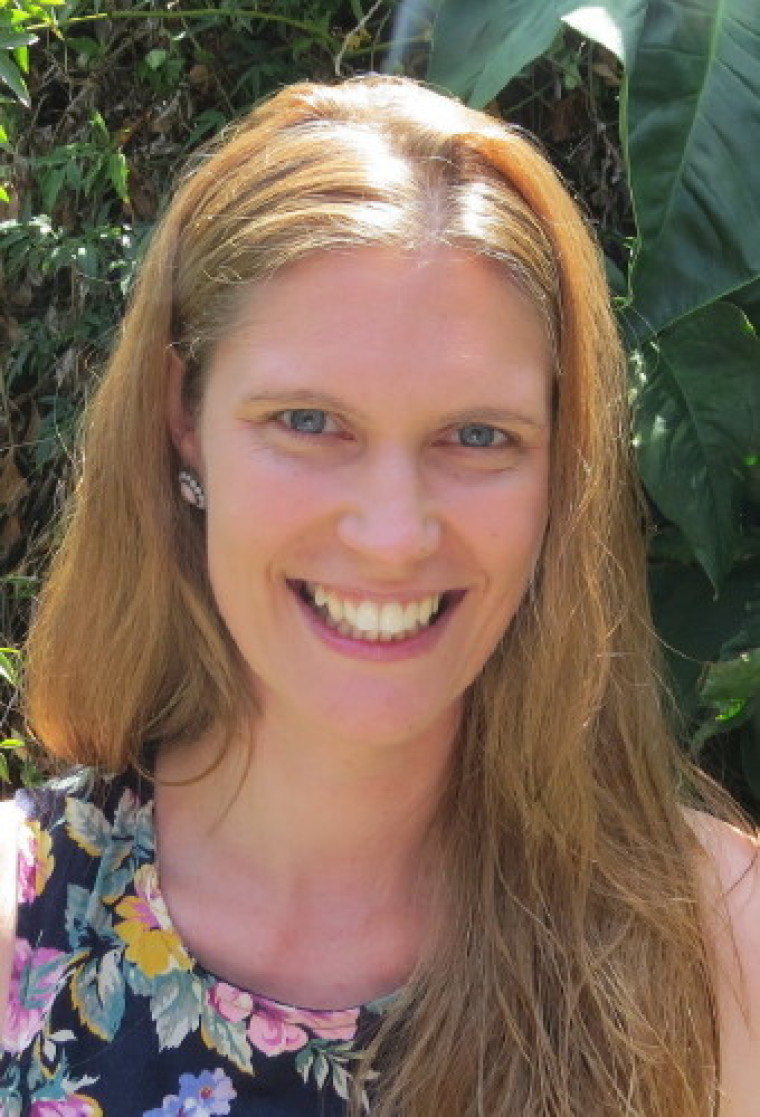
Danielle Carney lives on the Gold Coast. She has a degree in Theology and is now studying again. She is married and has a three year old daughter and two sons who live in heaven.
Danielle's archive of articles can be viewed at www.pressserviceinternational.org/danielle-carney.html