
The world's largest AIDS conference is underway in Sydney with the federal government pledging an extra $400 million to fight the virus in the Asia-Pacific region.
There are more than 5,000 participants from 130 countries attending the conference to hear from top health experts in how to combat the pandemic, which opened on Sunday and will conclude on Wednesday.
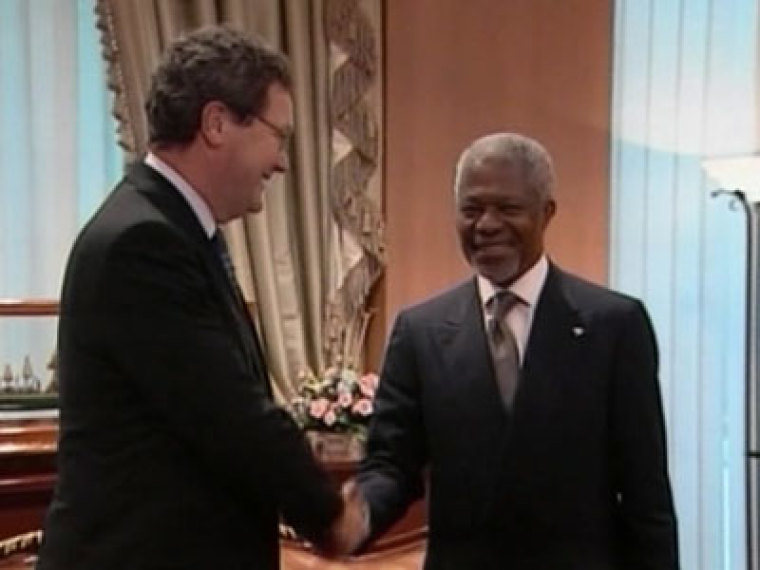
The Foreign Minister, Alexander Downer, told the Nine News network that the federal government would do their best to assist in the fight against the disease by increasing the budget to a billion dollar.
"We're doing our best, obviously, to assist," Mr Downer said. "We've provided $600 million to address HIV/AIDS, today we're increasing that to a billion dollars."
Meanwhile in the conference, new evidences gathered in Kenya and Uganda gives greater strength to a previous study conducted by a South African study showing that male circumcision could reduce the risk of HIV infection by 60 percent. The study in Kenya and Uganda had 2,000 heterosexual male involved in the trial with half being circumcised.
However caution is being noted by experts, who said that the procedures needed to be carried out by experienced surgeons and accompanied by an education programme, reported BBC.
Within the conference itself, organisers are calling on delegates to sign a pledge to request governments from around the world to allocate 10 percent of all resources to AIDS research.
40 million people are infected with the AIDS virus while treatment for it has grown from 240,000 people in 2001 to 1.3 million by 2005, according to the United Nations.
The low number of people being treated compared to those who has the virus was described as 'a shameful failure on part of the global community,' by the co-chairman of the Sydney conference, Pedro Kahn.
"The fact that we have not yet translated this science into practice and that most people in the world who need access to prevention strategies and effective treatment do not have access is a shameful failure on the part of the global community," Mr Kahn told reporters.