
The writer exclaims, "Why would you fly from London to Paris, for example, and tackle Heathrow and Charles de Gaulle airport check ins plus security when you can catch a high-speed train that lands you right in the centre of town?"
http://www.smh.com.au/travel/traveller-tips/the-need-for-speed-europes-trains-beat-planes-20091008-gokp.html
This is old news in Australia, says Footplate Padre Mark Tronson, a Baptist minister who was a locomotive engineman in the later days of steam and into the early diesel era, and has since written 16 books of train drivers' anecdotes.
"The Newcastle Flyer (Sydney to Newcastle) accomplished this in the days of steam and diesel, and now with the electric trains, it is still quicker to catch the Flyer than to fly," exclaims M V Tronson.
Many Australians may not even realise that it is further in distance between Sydney and Newcastle than it is between London and Paris or London and Brussels or London and
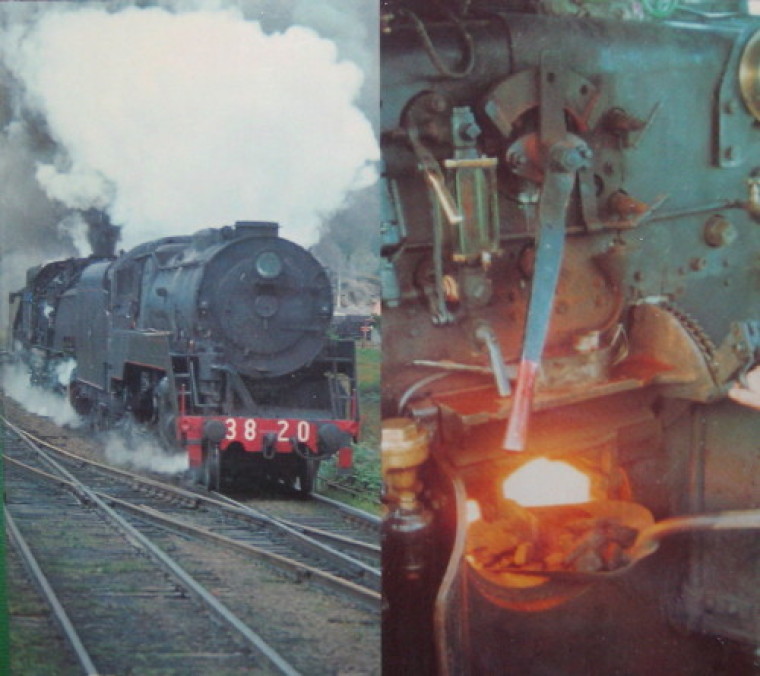
The Newcastle Flyer has a distinguished history. In the days of steam there was no more important a train in the country, and it was a 'badge of honour' for locomotive inspectors to show up at Central Railway Station and make a fuss by ensuring that everything was in order with the huge 38 Class steam engine.
The New South Wales Government Railway's Chief Commissioner had on his wall a number of large clocks showing the times specific express trains were due out or in,
and pride of place was the Newcastle Flyer's clock.
The early 1950's saw the beginning of the diesel era and steam was gradually but inevitably taken out of service. It wasn't until the early 70s that the 38 Class steam engine was cut as until then they hauled the Moss Vale Train and the Southern Highlands Express to Goulburn.
The 38 Class steam engine that had faithfully hauled the Newcastle Flyer, so the story goes, was tested in 1956 against the new 44 Class diesel hauling a second division of the Flyer, side by side. The tracks were cleared and test was begun.
The 44 Class diesel was a 1800 horsepower engine of streamline design with a rounded nose at the front. They had all the 'mod cons' including a speedometer and a black box (a tape that recorded speed) so that the 70 miles and hour speed was strictly adhered to.
By contrast, the 38 Class did not have a speedometer, and running times were governed by the driver's watch.
Yet, the 38 Class hauling the Newcastle Flyer, we're told, put paid to the 44 Class diesel which illustrated that the times actually made by the 38 Class showed that steam was considerably faster than diesel – even though it may have been because of the strict governing of the diesel to 70 miles per hour.
Footplate Padre M V Tronson said that he, along with all enginemen of the 1960s enjoyed the 44 Class diesel. They rode beautifully, hauling express passenger trains at 70 miles an hour (115 kph) and when hauling heavy steel loads, they'd climb 1 in 30 banks at 12 miles an hour endlessly.
As the diesel era took over, the crews began to appreciate being in a comfortable cabin of a powerful diesel rather than in a steam engine where shelter was limited when it was wet, cold and windy, the work was heavy, and it was far from pleasant much of the time.
The NSWGR eventually ordered 100 of these supreme 44 Class locomotives whose service became a legend. Fifty five years later there are still some 44 Classes powering along.
"Using the history of the Newcastle flyer as an example, we can show that with the right combinations of quality track, reliable engines and patronage, there is potential for a 'fast train' between Sydney and Canberra, as has been discussed for decades," Footplate Padre Mark Tronson stated.