
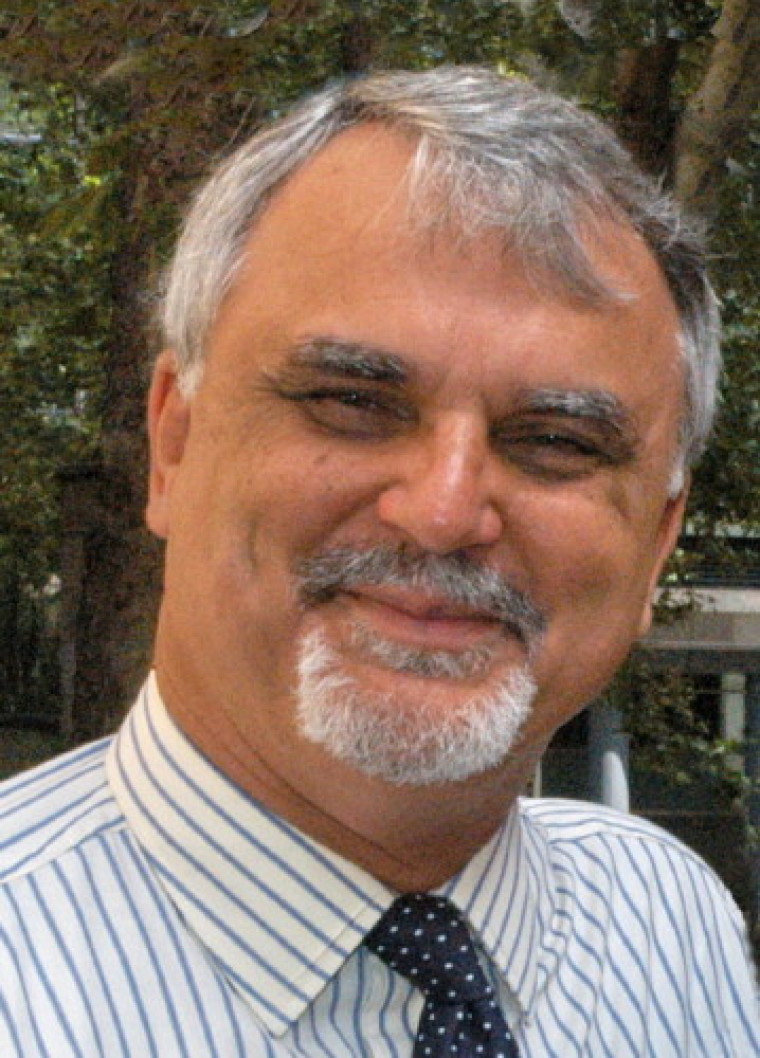
He does not see nonconformist news or comment reflected at one end of the spectrum, nor that of the nine different Orthodox groups at the other end.
M V Tronson is commenting on this subject as the Sydney Morning Herald published yet another article whereby the Australia in which we live, focuses on Roman Catholics and Anglicans.
The word 'nonconformist' comes from the English 1662 Act of Uniformity. It originally referred to those Christians in England who were not Church of England (Anglican), which at that time represented a number of minority Christian groups such as Presbyterians, Congregationalists, Baptists and Quakers and later Methodists, Unitarians and members of the Salvation Army.
http://en.wikipedia.org/wiki/Nonconformism
The term 'nonconformist' gradually spread across the globe, and came to mean a much larger group of Protestants who were non-Anglican which, today, includes the vast numbers of the group loosely called Pentecostals. In a quirky twist of history, the nonconformist Baptists are now greater in actual number than the historically traditional Anglicans.
Having noted those world-wide figures, Mark Tronson has to admit that Australians seem to be a little more conservative than the world in general. The Australian census figures from 2006 show that 25.8 % call themselves Roman Catholics, 18.7 % Anglicans and 16.4 % are Nonconformists and 2.7% Orthodox. He emphasises that the numbers of Anglicans and nonconformists are close, and there is no excuse for the media to lump all Christians under the two 'conservative' headings. http://en.wikipedia.org/wiki/Religion_in_Australia
He also knows, from separate research, that those figures do not tell us whether people attend church regularly or what congregation they attend. For those figures one needs to search out the various church survey results where annually those in congregations around Australia fill in a separate data document. http://www.ncls.org.au/
Of the 5.1 million Roman Catholics in Australia only 9% attend Mass on anything like a regular basis. Of the 3.7 million Anglicans only 3% attend church, however those Anglican figures across Australia do not apply within the Sydney evangelical diocese, where 27% attend church. Archbishop Peter Jensen is on a campaign to effectively increase that figure to approximately 50%.
The comparative figures for Pentecostal and other nonconformist church attendees reveal a startling result. A whopping 62% of 'evangelical and Pentecostal' nonconformists either attend church regularly or are involved in some way in the life of their church or its mission welfare arms. This means there are more 'evangelical and Pentecostal' nonconformists in Australia actively involved in church than both Roman Catholics and Anglicans combined.
Even a cursory glance at his own Tweed Heads area reveals this. There is one Catholic and one Anglican church, yet five large Pentecostal congregations, a Uniting church, a Presbyterian church with three separate congregations, a Baptist church, a huge Salvation Army corps with its own indoor sport centre and a Church of Christ congregation which has also recently purchased an existing sports indoor centre.
It would be instructive if the journalists could use these figures, when making generalised comments about Christian communities.
Yet, according to Mark Tronson's reading of the daily media, the press ignores these realities to present a case of Australian Christianity rushing headlong down the gurgler, when in reality the truth is quite the opposite.
M V Tronson reveals another startling anomaly from these figures. Many Christians who attend Pentecostal churches actually state on their census forms that they are Roman Catholic (in M V Tronson's view Pentecostalism is attractive to disenfranchised Roman Catholics as they too have a clearly defined leader). They also show that those Sydney Anglicans who live outside Sydney normally attend Baptist or Churches of Christ congregations rather than 'traditional or high church' Anglican churches.
As well as this, of those three thousand Australians in ministry who rely on faith financing, such as M V Tronson and his wife, whose income is generated from donations generously given by a network of supporters, 97% are nonconformist Christians.
But Mark Tronson does have some sympathy with the journalists in the wider media. He admits that the nonconformists themselves have a problem representing themselves to the media. He alludes to some examples where it may be difficult for a journalist to find a representative voice among nonconformist groups, whereas they can always get a 'spokesman' for what is seen as mainstream Christian groups (Catholic and Anglican).
Within the community that calls itself Baptist, there is autonomy for each church with a Congregational form of government. This is the direct opposite to a hierarchical system, familiar to Catholics and Anglicans, where you have Diocese Archbishops or a Pope.
In other words, there is no one leader, rather the media themselves pick out a high profile 'nonconformist' spokesperson, but that person functionally only represents him or herself.
The President of the Australian Baptist Churches only serves a three year term, hardly enough time to create a media profile, and in any case his or her opinion is only that of an individual. One such 'personality' is Baptist minister the Reverend Tim Costello who served for three years as the President, then became the CEO of World Vision. He is sought out because his name is familiar for 'other reasons', and because he became media savvy during a short stint in an unrelated role as Mayor of St Kilda.
Pentecostals do a little better in that their larger churches have significant leaders, but again they only speak for that single congregation while within their representative body, 'The Australian Christian Church', the President is only there for a limited period.
Meanwhile, there are serious groups who aim to co-ordinate various nonconformist groups (or largely nonconformist), such as the Australian Evangelical Alliance, but they don't seem to be able make secular media news print http://www.ea.org.au/ ; and yet others such as the 'Australian Christian Lobby' http://www.acl.org.au/ gets publicity on social issues.
This brings the issue of 'generalisation'. Some of these groups become 'notorious', at least in the eyes of the press, in being 'left wing' or 'socialist' in philosophy, while others become synonymous with extreme conservatism. There is no overall 'Christian' voice, and no overall 'nonconformist' voice. This makes it difficult for the press to cover something to do with Christian values or Christian opinions in a traditional media '10-second- sound bite', so M V Tronson is concerned that the reporters may just stop trying.
It is in this context that Reverend Dr Ross Clifford, former Australian Baptist President, Principal of Morling College (Australia's largest seminary), and the Sydney Sunday night radio 2CH disc jockey, maintains that Christians needs to focus, for serious secular media attention http://en.wikipedia.org/wiki/Ross_Clifford.
Taking up the challenge, Mark Tronson, Australian cricket chaplain and a recognised nonconformist, has used his past experience writing for the media to develop 'Press Service International' as one arm of his ministry of Well-Being Australia'.
He maintains the quality of his daily press release articles by utilising three editors with differing backgrounds. These people look at the articles from a theological viewpoint, a common sense and grammatical viewpoint and the suitability of having selected articles rewritten for a tabloid press 'look'.
In his view, it's the quality of the article and its validity to current issues that ultimately earns respect in the secular world. Having written 24 books and newspaper articles on 'field hockey' for 24 years to 1994, he has developed a technique that helps in these endeavours.
The nonconformist representation therefore, in M V Tronson's view, depends on high quality articles written specifically for media attention. This includes a necessary flair for news angles, otherwise the secular media takes the easy way out and goes to Roman Catholic and Anglican spokespersons.