
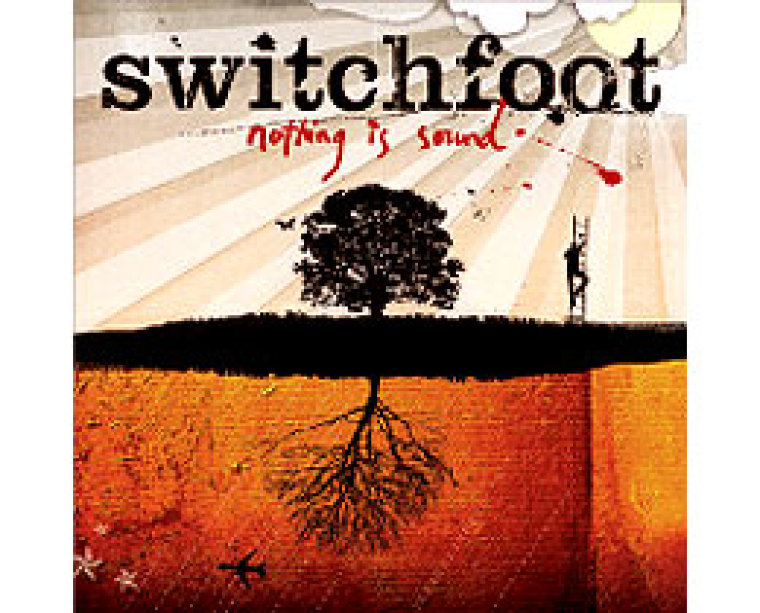
is evident that Jon Foreman, lead singer of Switchfoot, really knows how to write a song where the lyrics and the music complement each other. There’s strength on both the musical side and the lyrical side of Nothing Is Sound. While Nothing Is Sound has a darker tone than any of Switchfoot’s previous releases, with tracks like “Lonely Nation,” “The Blues,” and “The Fatal Wound,” that’s not necessarily a bad thing. A theme of hope is present in the darkest parts of the album and that makes entire CD even more effective. Switchfoot looks forward through lyrics like “It'll be a day like this one/when the sky falls down/and the hungry and poor and deserted are found” ("The Blues") .
The album begins with “Lonely Nation,” a solid, driven first track which touches on the loneliness of this generation, despite its being connected electronically. “The Shadow Proves the Sunshine” and “The Blues” enhance the album’s darker side, but it takes a more positive turn with “Golden” and “We Are One Tonight.” Tracks like “The Fatal Wound” and “Daisy” take the backseat on Nothing Is Sound--they just don’t stand out much. Unlike the rest of the album, these tracks don’t give the listener anything new or exciting. “Happy Is a Yuppie Word,” is arguably the strongest track on the album. With strong lyrics and a smooth melody with a touch of desperation and yearning, this is the centerpiece of Nothing Is Sound. It gets better every time you play it.
Strong references to Ecclesiastes are scattered through and about Nothing Is Sound, which is evident beginning with the album’s title. Nothing is sound, nothing is forever, and everything is meaningless. Although this theme of emptiness is prevalent throughout the album, Switchfoot reminds us that there’s something that overcomes this lonely world--something that is sound. There’s the promise of a relationship with a God who will take us up to heaven with Him on “a day like this one.”
Akshay Kr. Baluni
Christian Today Correspondent