

'No-one can do everything, but everyone can do something'.
I don't know who first said this, but I do know it has become somewhat of a cliché.
I'm one of those people that turns off his ear when clichés are used as a call to action. I feel like we can hear these clichés so much that we get desensitised to them.
That is how I felt about the above phrase, until it was given to me in some context. I read an interesting book recently that basically unpacked this whole concept in a way that resonated with me. Max Lucado's book Outlive Your Life: You Were Made to Make A Difference turned this phrase from a cliché that gets thrown around whenever a recruitment (for anything at all) is taking place, into a personal and contextual challenge.
The first step was to link this phrase with the understanding that a believer's identity comes from Christ. When we have our identity in Him, His character should begin to sink into us and outwork itself in our lives. This, along with exploring the Word for the will of the Father, gives us context to what God actually wants us to do in our brief time on earth.
Among other things, He wants us to take care of the poor and in need, to share the gospel, and to be compassionate and loving to all. We are essentially to be a current day demonstration of Jesus. So with this in mind, I then had context for the statement in discussion, and could start applying it to my life.
I can't do everything, that's for sure – even if I tried! But thankfully God tells us in his Word that it takes a group effort to accomplish his will for humanity. I liken this whole concept to 1 Corinthians 12 verse 21 – where the eye cannot tell the hand it is not needed, and the head can't say the same to the feet. The head cannot do it all, and neither can the eye. But the eye serves its own unique function, as does the head. Never is one limb or organ asked to perform as the entire collective body. They all operate independently and yet they function together on a grand scale as the body.
So that means we must understand that the actions of a single person DO make a difference. If the eye decided to stop working then the body wouldn't be able to see. If the foot decided it was not necessary then walking would be a little difficult.
I can draw a parallel to this with voting. A single vote can alter an outcome. We must remember that a majority group is made up of a bunch of individuals. You get my point I'm sure.
Can make a difference
So a single life can make a difference to others. Your life can make a difference. My life can make a difference. And because it can, we should make it so. But what is 'making a difference'? It is feeding the poor, sharing the good news, and loving all of the people. We can do that. We can ALL do that in our day-to-day lives. With God's help, we can put ourselves second, and others first. Isn't that what Jesus did? We love because he first loved us. As a child copies what he sees, we too should follow the actions of our heavenly father.
The thing that we have to get into our minds is that it is not about making sure we participate in a certain number of outreach events per year, or give a certain amount of money to missions each quarter. Let's not get legalistic about it all.
It is about our everyday actions. What if we had a mission mindset 24/7? Or a generous hand all day, every day? Or the sort of kindness in our hearts that wants to bless people because we are blessed?
I understand now that we don't have to do everything, and we can't anyway. But everyone CAN most definitely do SOMETHING. And if Jesus' life is anything to go off, that particular 'something' is an outworking of love.
Max Lucado hits the nail right on the head with his understanding that 'you were made to make a difference'. My challenge is that it becomes our everyday life.
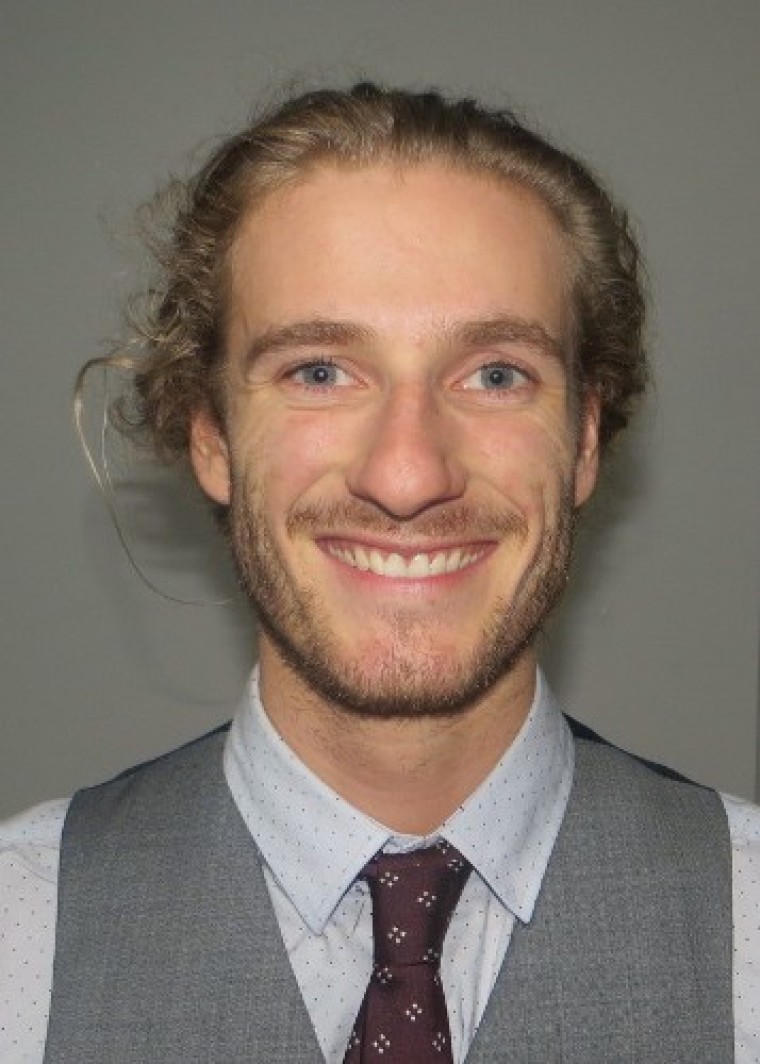
Samuel James is a Media Communication graduate based in Wollongong.
Samuel James previous articles may be viewed
http://www.pressserviceinternational.org/samuel-james.html