
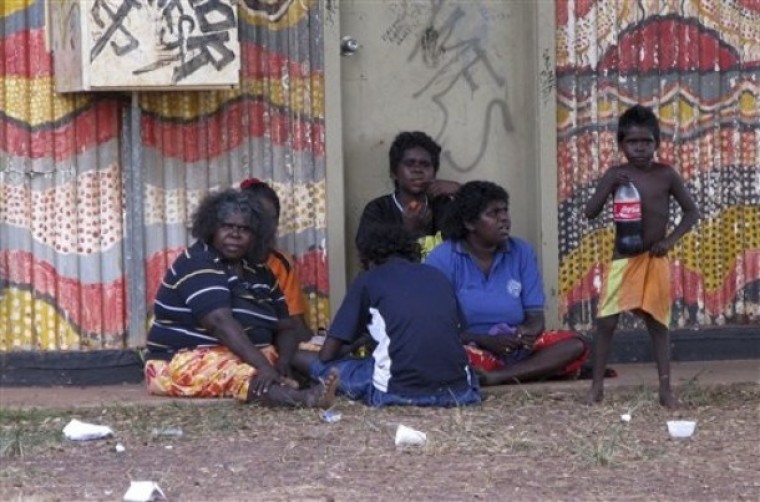
Many western Australian communities, such as Halls Creek, have recently imposed self-restrictions on alcohol sales. Now officials are reporting a drop in nighttime brawls in these areas. Many Aboriginal leaders say the restrictions are necessary to reverse the effects of a drinking culture that has led to widespread alcoholism, violence and child abuse.
The government imposed similar restrictions in the Northern Territory, an area with the largest population of Aborigines. Many of the Aboriginal people are angered by these restrictions, calling the policies "the intervention." They remember a time prior to the 1960s when they did not experience equality.
"We fought so long and hard for our rights to be able to say this and do that," said Jamie Elliott, 30, who runs an employment training program for Aboriginal youths and does not drink. "Basically, for us to just hand those rights back, I thought, 'Come on, surely, there is an in-between.' "
But others see the self-imposed alcohol restrictions as the best solution:
"We wanted to take control of the situation by speaking out, whereas the intervention in the Northern Territory was something that just came down on people," said Doreen Green, 65, a primary school teacher and one of two Aboriginal women who led a campaign to restrict alcohol here.
About half of Halls Creek's 3,100 population suffers from alcohol-related problems, including some with serious health issues like brain damage and babies born with fetal alcohol syndrome.
Another issue facing the Aboriginal people is the worsening living conditions. The Northern Territory's peak housing group says easing over crowding should actually be the first priority in improving lifestyle for the indigenous people.
NT Shelter executive officer Toni Vine-Bromley says overcrowding creates conflict and family dysfunction, "It also impacts on people's health, their ability to study or get an education, or get food in the fridge and all those things that are really what you would just normally take for granted."
The government plans to spend $672-million on a five year program to build new housing and improve current living conditions. The NT government says more than 80 homes have already been built in Aboriginal communities in the last two years.