
|PIC1|The annual Pilgrimage to Uluru started in 2001 as a cultural exchange or Australian secondary students under the banner of Schools in Harmony.
Schools in Harmony is a network of Government and Non Government schools working together to bring hope.
Busloads of students will begin their journeys on Sunday which will take anywhere from 7 to 14 days depending on the distance.
The pilgrims will engage with indigenous communities along the journey and then join together at the Yulara resort where they will engage in a range of ways with the culture and people of the Mutitjulu community.
Mutitjulu has been a place of controversy over the past few years with the former Governments intervention policy, and there is general agreement that there are still significant issues for the community to overcome. Despite this fact, the annual pilgrimage has seen hundreds of young people engage with the community and learn to appreciate the remarkable treasure aboriginal culture is for Australia.
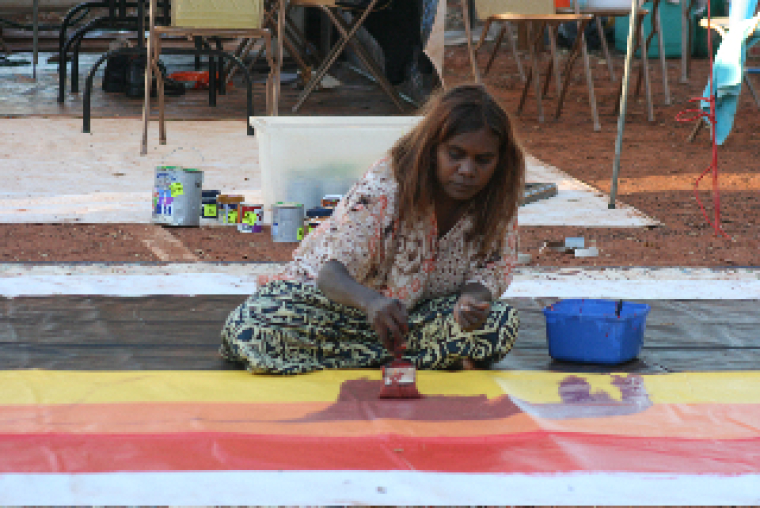
The pilgrimage is also very important for the Mutitjulu community. Members of the community have been preparing a banner for the pilgrim's arrival.
Coordinator of the Uluru Pilgrimage Base camp, Heather Bradbury, says: "As we talked this afternoon (with the Mutitjulu), we talked about hope and sunrise and life, and came up with some Pitjantjatjara words that describe this."
"The banner is a story about hope. The sun is rising over the rock, it brings hope. It is a symbol of life. We need to join together with the young people, older people, all people, together with God, so we can bring hope, so we can make and build the nation strong."
"The words we will paint onto the banner will be: Nganana Godala
tjungurinjkula ngura nganampa kunpu kanyenma which mean: "As we join together with God, together we make our Nation strong."
The base camp is on the web at www.fusion.org.au/schoolsinharmony
National coordinator of the Awakening movement, Mal Garvin, says: "It is fitting that we can commission these young ambassadors of reconciliation at the annual Easter marches."
"Easter is about hope and about reconciliation".
"The United Nations has declared this year the international year of reconciliation, and asked, at its 56th plenary meeting, on 20 November 2006:
concerned Governments and international and non-governmental organizations to support reconciliation processes among affected and/or divided societies and to plan and implement adequate cultural, educational and social programmes to promote the concept of reconciliation."
"This Easter Sunday, at the annual march, these young people will begin a journey that embodies what the United Nations is hoping for in this year of reconciliation".
"A key moment on the Pilgrimage is the Water Ceremony, where Indigenous elders give the Pilgrims water, a symbol of the water holes that early aboriginals led Europeans to, only to have their generosity repaid with violence and banishment from their lands. As the young people take the water offered in this ceremony, they are invited to accept the gift differently to their forefathers and commit themselves to work for reconciliation. "
"We are very proud of the Pilgrimage to Uluru and the profound affect it has on the young people who make the journey. Often these young people are struggling in the school environment but something happens as they leave the familiar and engage together with the ancient cultures of our indigenous people".
The Pilgrimage starts when the pilgrims take part in the water ceremony similar to that which will take place at the rock, inviting those who have participated in the Easter March and Festival to similarly commit to reconciliation.
The Easter Sunday marches in every capital city celebrate the new life that the message of the resurrection promises.